Books
Three books across philosophy, supernatural thriller, and historical fiction — each one an argument I couldn't let go of until it was on paper.
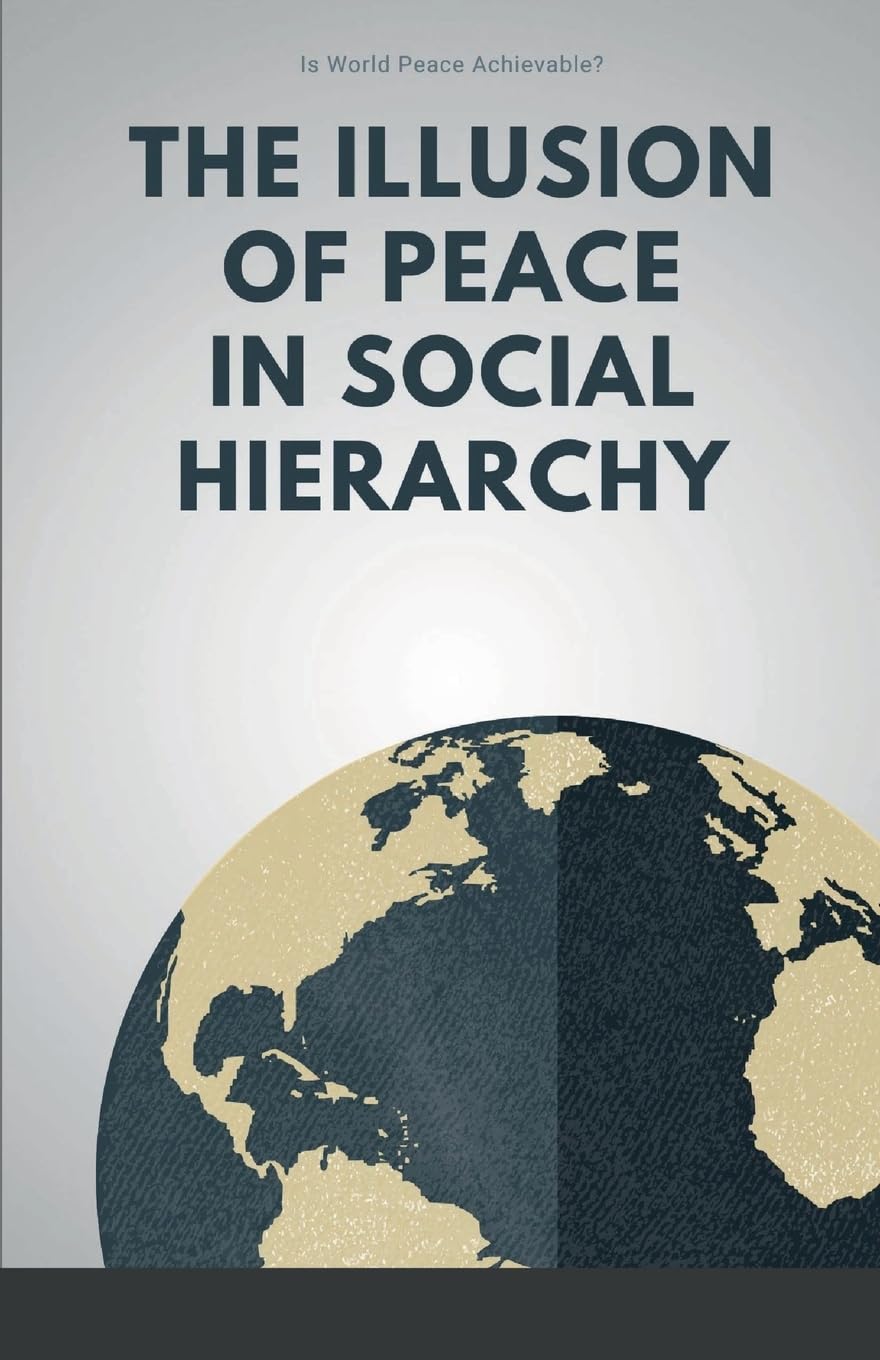
The Illusion of Peace
in Social Hierarchy
"The Illusion of Peace in Social Hierarchy" is a thought-provoking book that challenges the widely-held belief that world peace is attainable. The author explores the concept of peace from a variety of perspectives, ranging from intrapersonal to international relations, and examines the flaws in the structures that have been put in place to achieve peace, such as the United Nations and other organizations. The book is divided into three parts. In part one, the author critiques the zeitgeist of peace and highlights the difficulties in achieving it through approaches such as pacifism and democratic peace theory. The flaws of the current system are pointed out, and the author emphasizes the need for a more realistic approach to peace that acknowledges the complexity of human nature. In part two, the author proposes an alternative strategy for maintaining peace through deterrence. Drawing on game theory concepts like the Nash Equilibrium, the author argues that deterrence can be an effective way to maintain peace in international relations. Reciprocal altruism is also discussed as a strategy for maintaining peace in social situations. Finally, in part three, the author introduces Nietzsche's concept of the Übermensch and argues that the journey to becoming an Übermensch begins by realizing that peace is the creation of man and that the concept of world peace is no longer pertinent for promoting peace among individuals and states. The author also emphasizes the importance of rejecting the norms of society and living by one's own moral code.
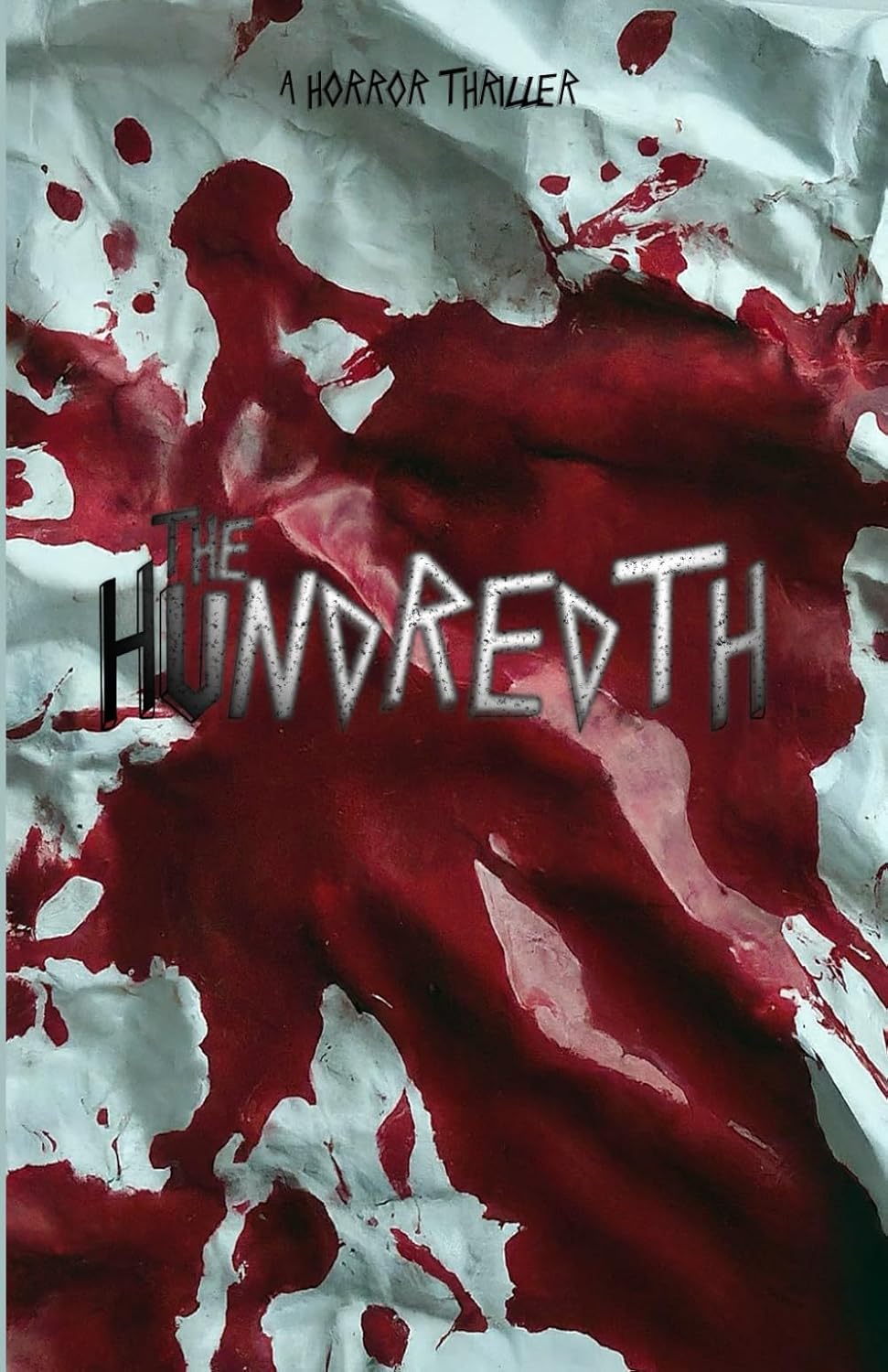
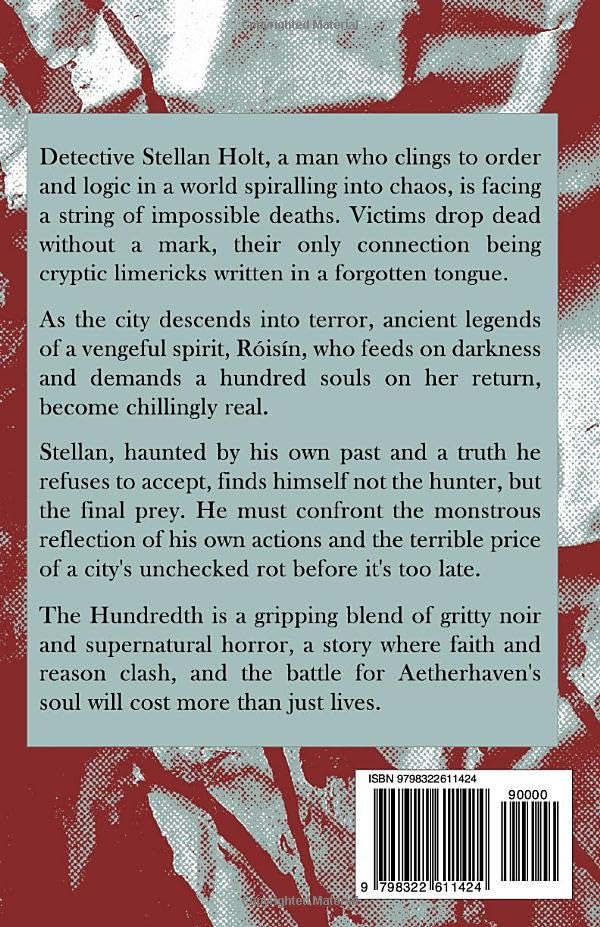
The Hundredth
In the technologically advanced city of Aetherhaven, where crime is nearly nonexistent, a series of bizarre deaths throws the community into chaos. Victims are found with no apparent cause of death, all having succumbed to disturbing hallucinations before taking their own lives. Detectives Stellan Holt, Gary McGhee, and Anthony Divino are baffled by the seemingly impossible crimes. As they peel back each layer of the mystery, they discover cryptic symbols and connections to ancient rituals, leading them to suspect a supernatural force at play. Meanwhile, legends of a vengeful spirit named Róisín, seeking one hundred souls to fuel her power, begin to surface. The detectives must navigate a world where science and logic are failing them, forced to confront not just a monstrous entity but their own inner darkness. Joined by FSA agent Ava Blackwell, they race against time to decipher the cryptic limericks left at each crime scene, hoping to unlock the secrets of Róisín's power before she claims her hundredth victim. But as the lines between good and evil blur, they must question everything they believe in and confront the terrifying possibility that the darkness they seek to defeat might already reside within them. The Hundredth is a chilling supernatural thriller that will keep you guessing until the very end. If you like fast-paced mysteries with a touch of the occult, then you'll love this gripping story.
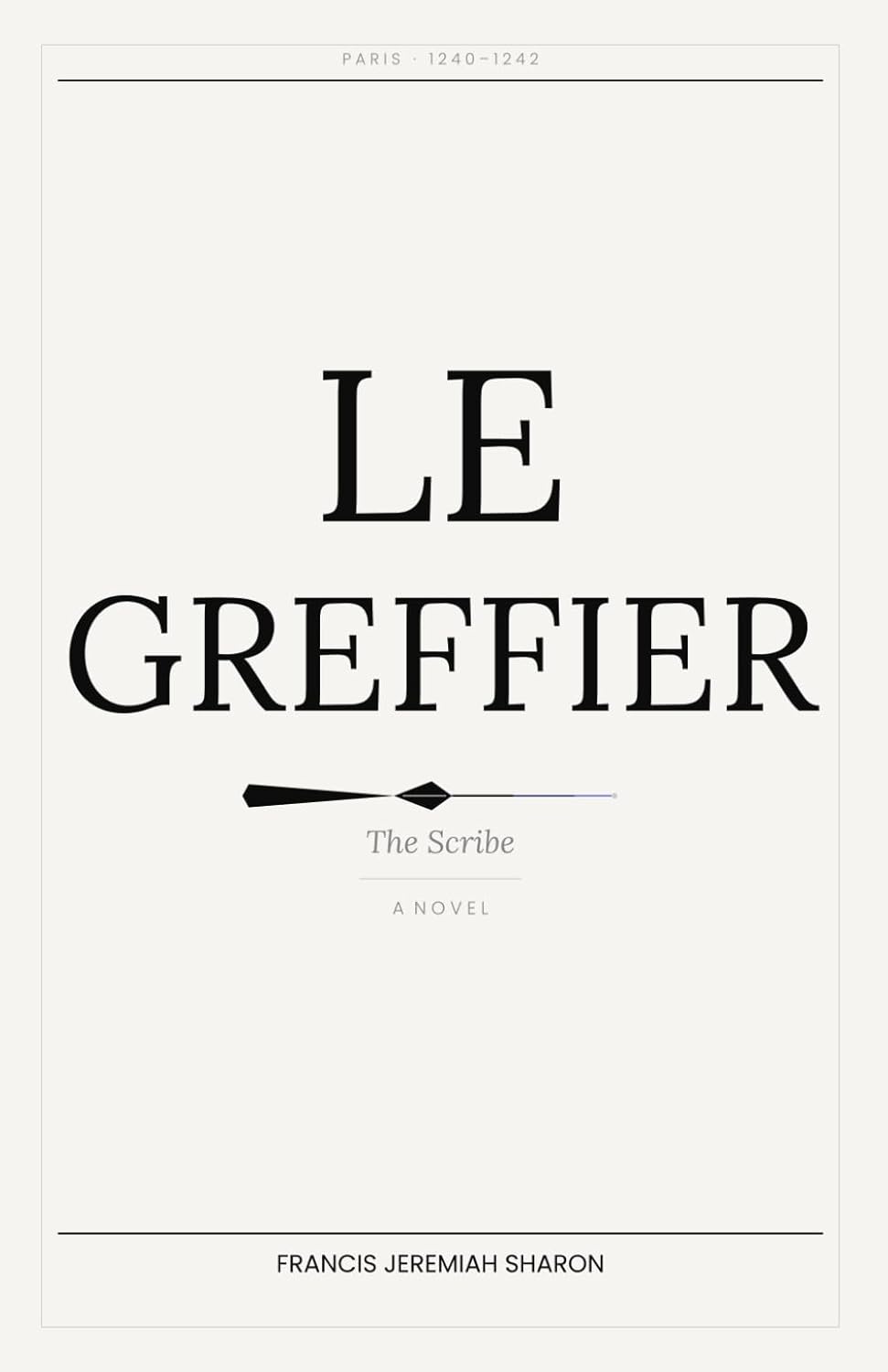
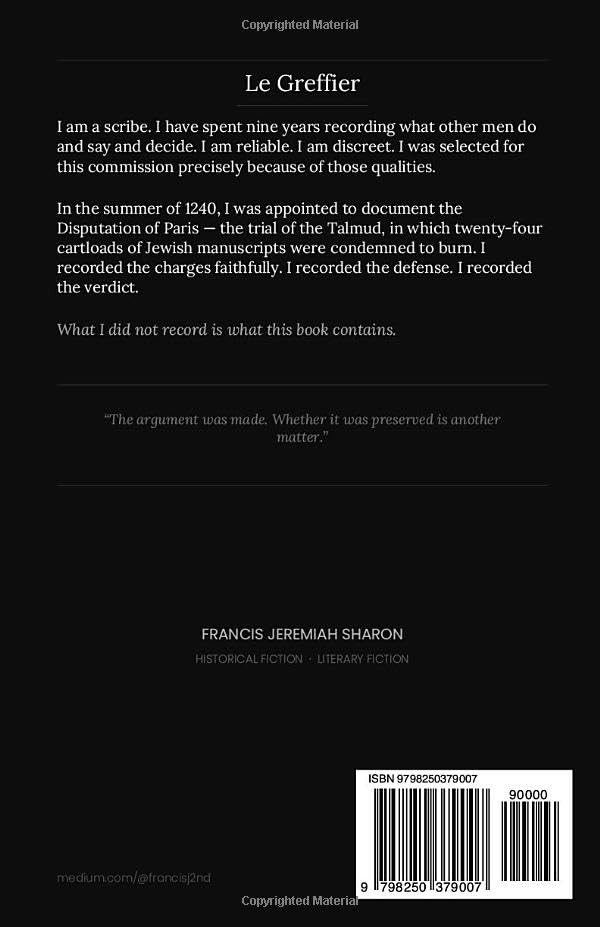
Le Greffier
Paris, 1240. The Talmud is on trial. Gautier de Morvaux is the scribe appointed to document the Disputation of Paris — the ecclesiastical proceeding in which twenty-four cartloads of Jewish manuscripts will be condemned to burn. He is reliable. He is discreet. He was selected precisely because he has no associations of consequence. He has been learning Hebrew from a bookbinder's daughter in the Marais. As the trial unfolds over seven days — the charges read, the defense made, the verdict already written before the first session begins — Gautier records everything in his official notebook. He also keeps a second one. In the margins of the first, in private marks only he can read, he counts the mistranslations he recognises and does not correct. In the pages of the second, he writes what the official record is not built to contain: Rabbi Yechiel's arguments as he actually heard them. A scene between the prosecutor and his former teacher that Gautier imagined because no one else was there to witness it. The truth of what he saw, in the version that will never leave his desk. In the months before the trial, the woman in the Marais told him: this proceeding has already been decided. What matters now is the record. She was right about the proceeding. Gautier has spent two years deciding whether she was right about the record. Le Greffier is a novel about the ethics of witnessing — about what a person owes to the truth when the truth is inconvenient, expensive, and two years too late. Set against one of the most consequential acts of medieval censorship, it asks the questions that the official record was designed not to answer. The argument was made. Whether it was preserved is another matter.